Dropping Light
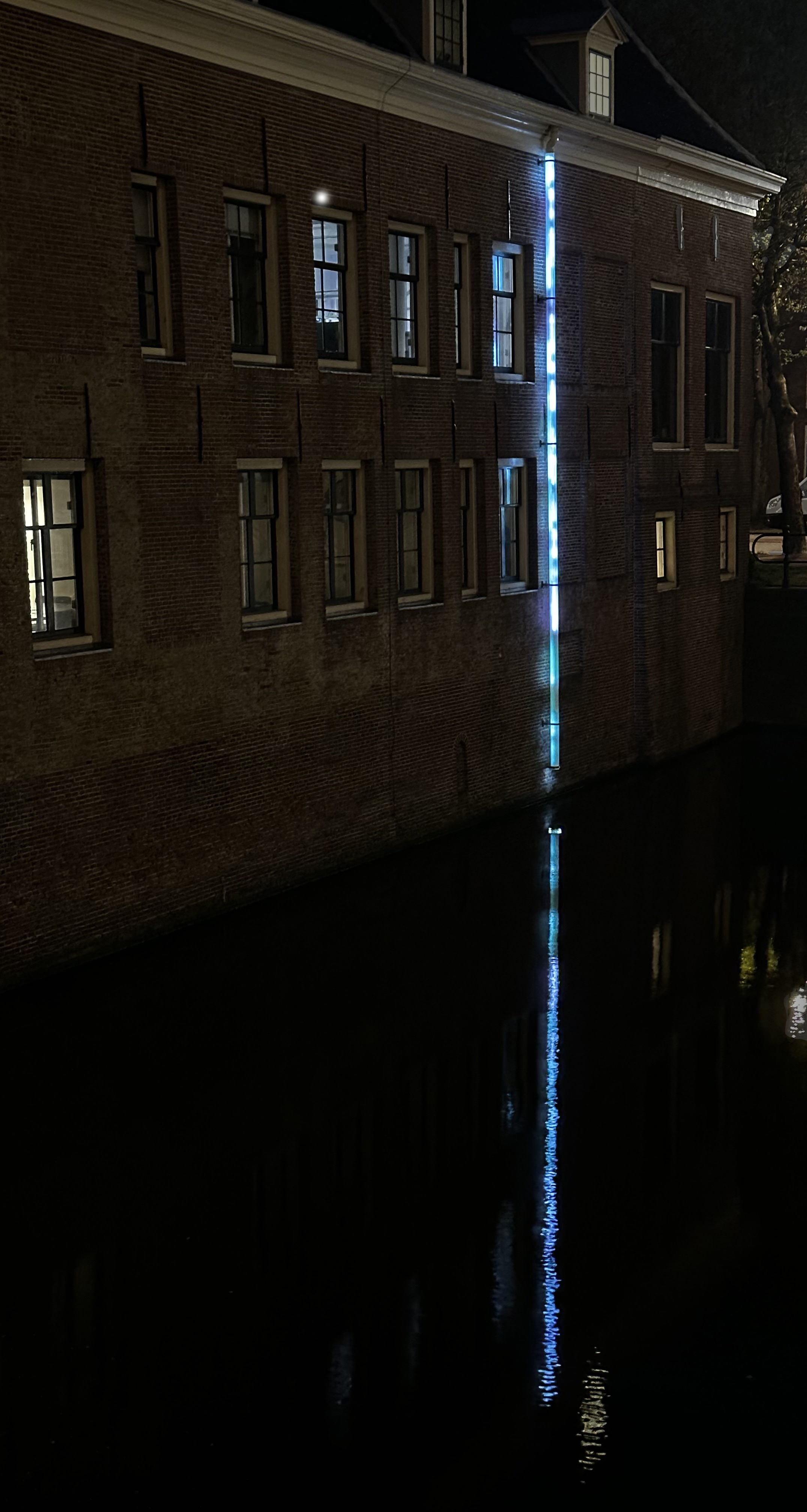
Dropping Light
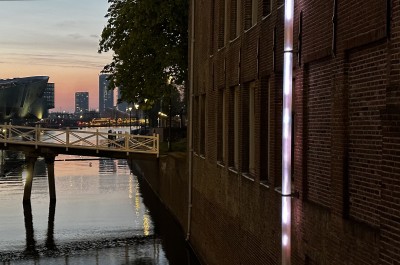
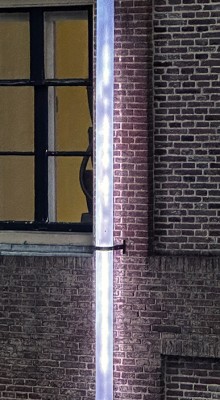
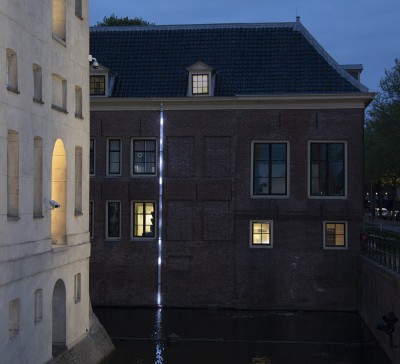
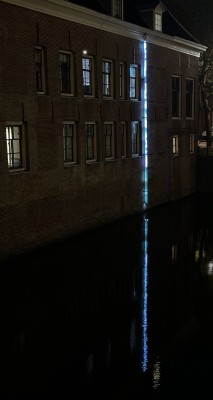
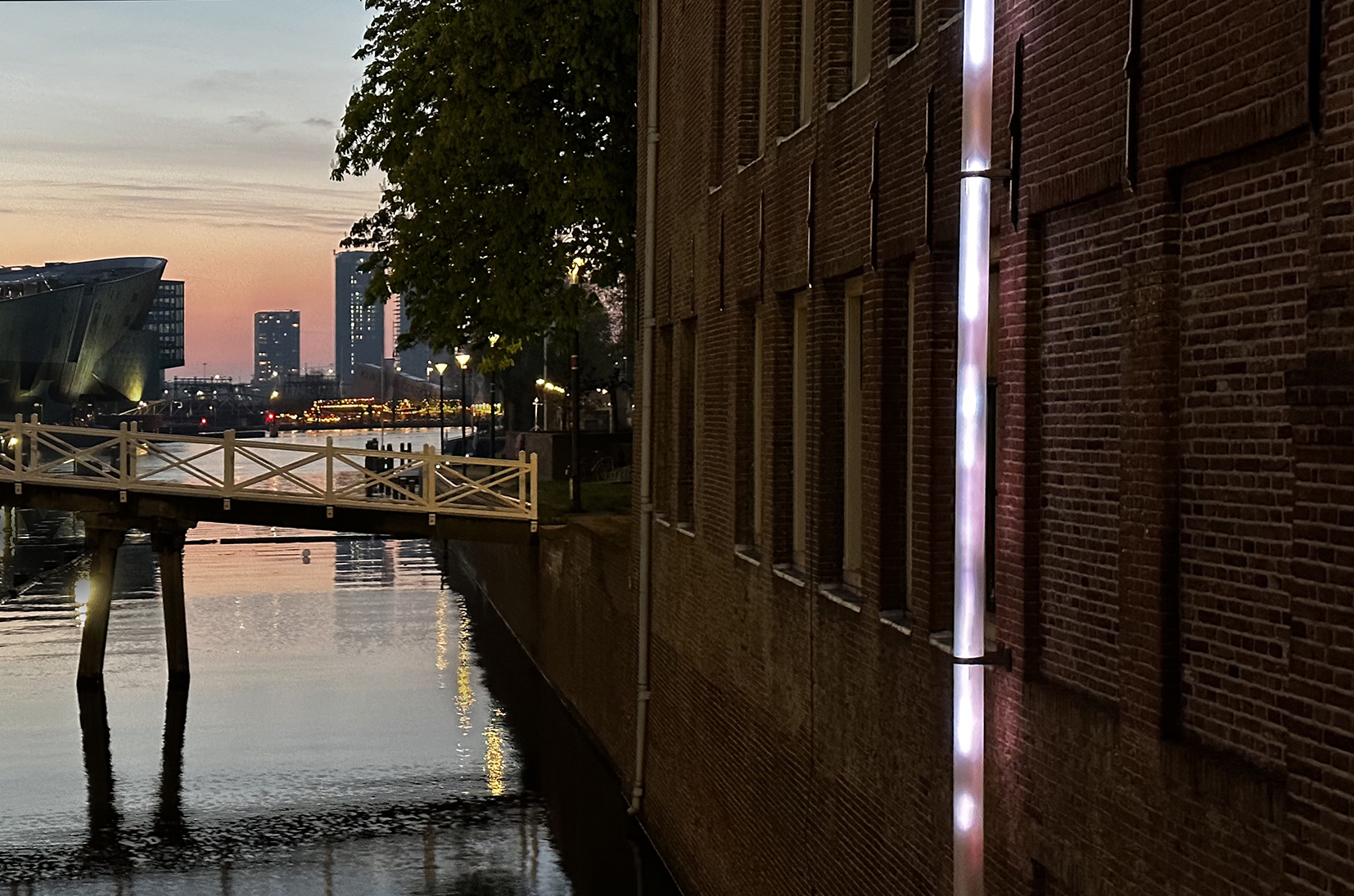
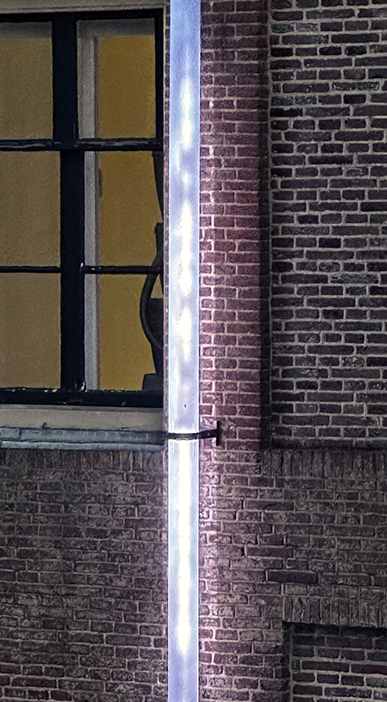
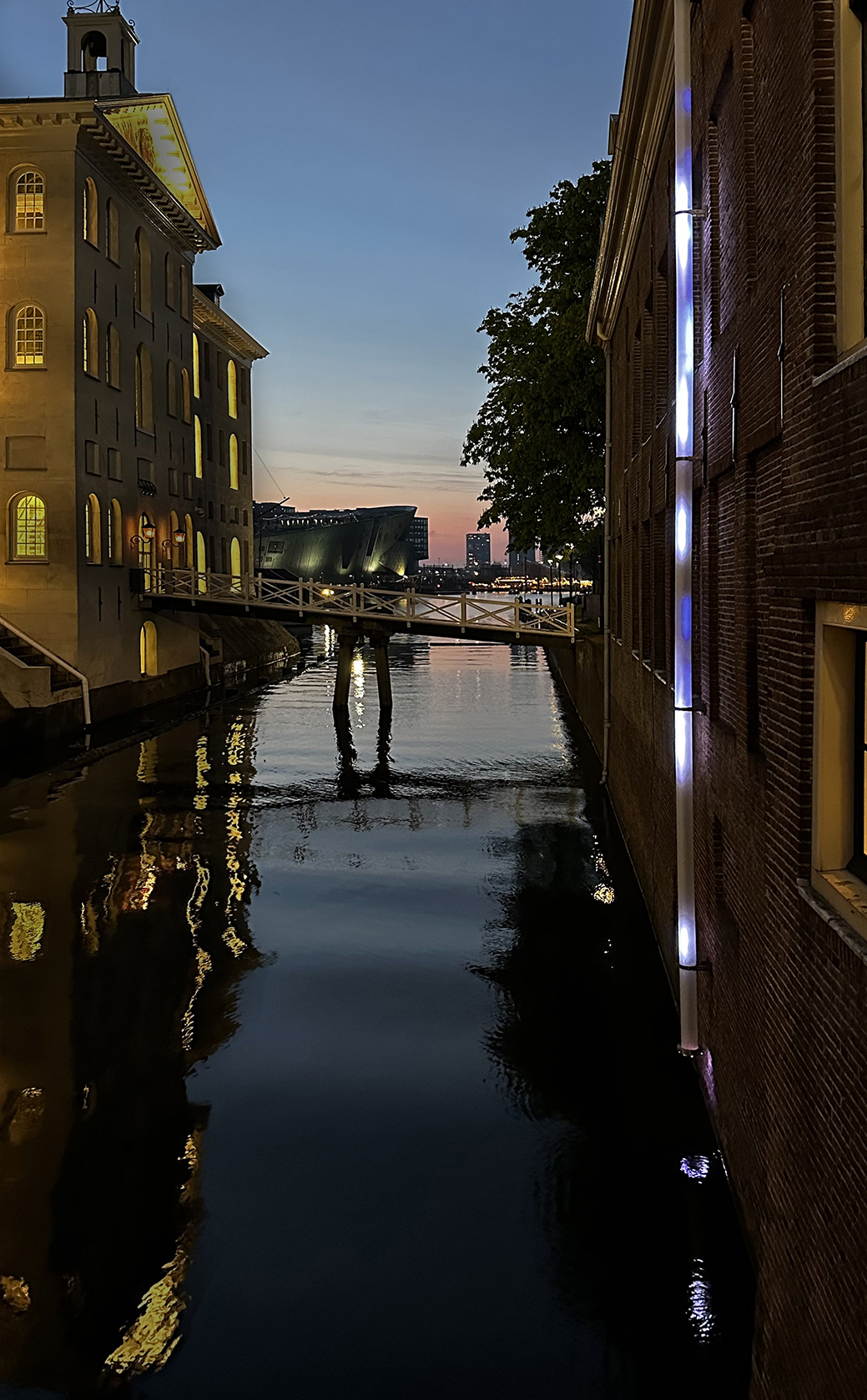
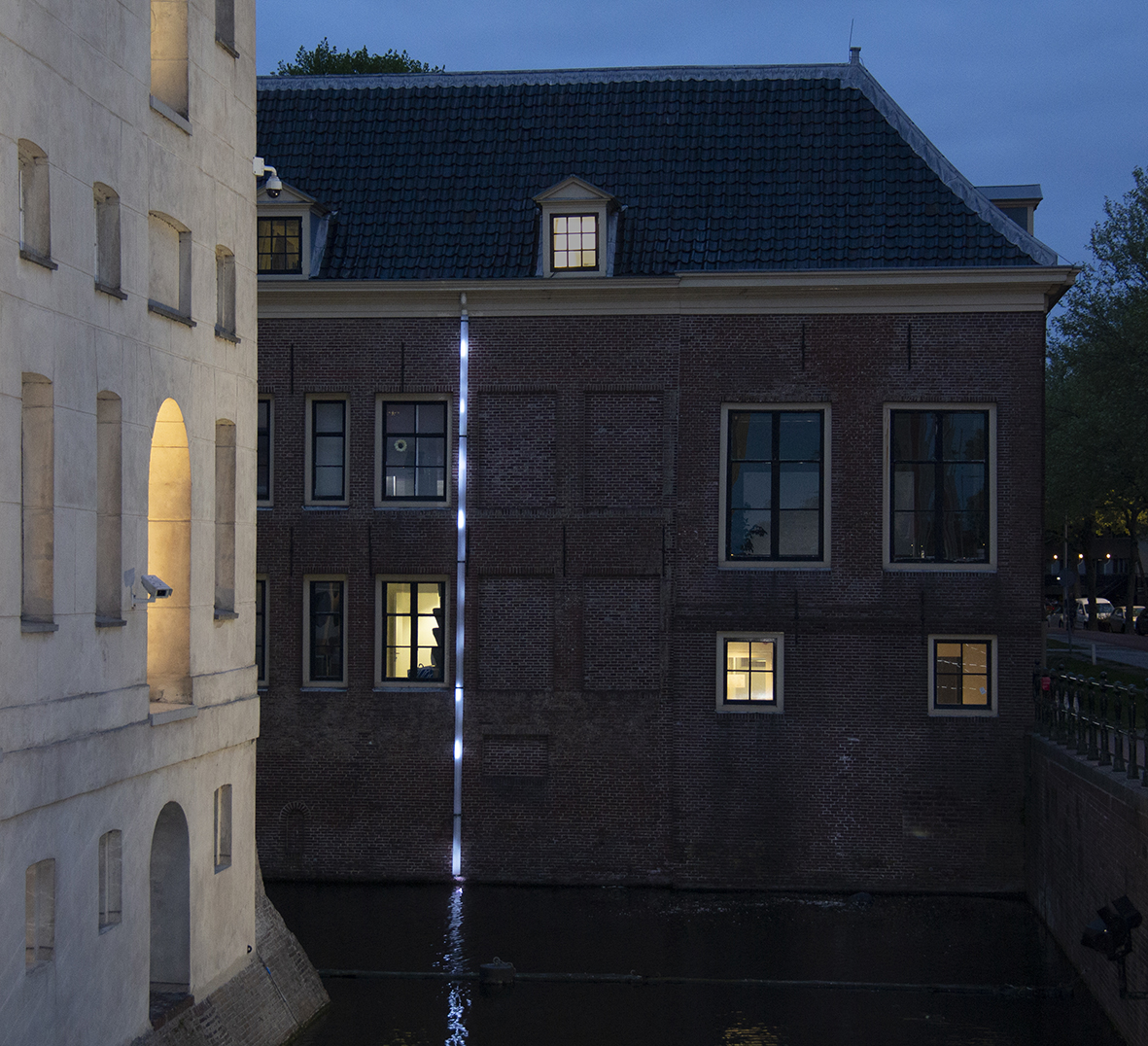
Specs: Rainwater drain 9.50 meters, LED, rainwater, light animation ± 6 minutes.
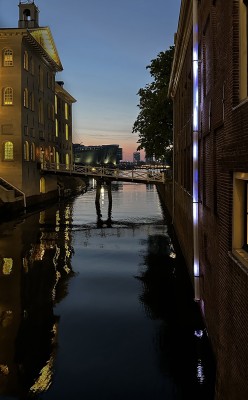
Location: 17th century exterior wall Wharf building Marineterrein next to the National Maritime Museum of Amsterdam.
The artwork Dropping Light shows the close connection between Amsterdam's history, location and ecosystem through an interplay of light and water. An existing drainage pipe has been transformed into a functional semi-transparent rain water drain. The rhythmic lighting programme is based on various appearances of water and inspired by natural colours, such as algae green or evening red, which are characteristic of the immediate surroundings.
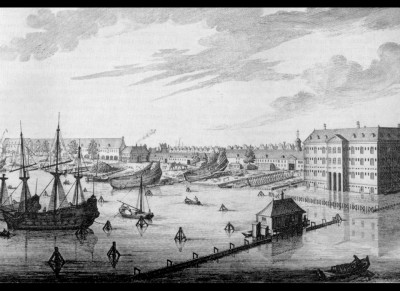
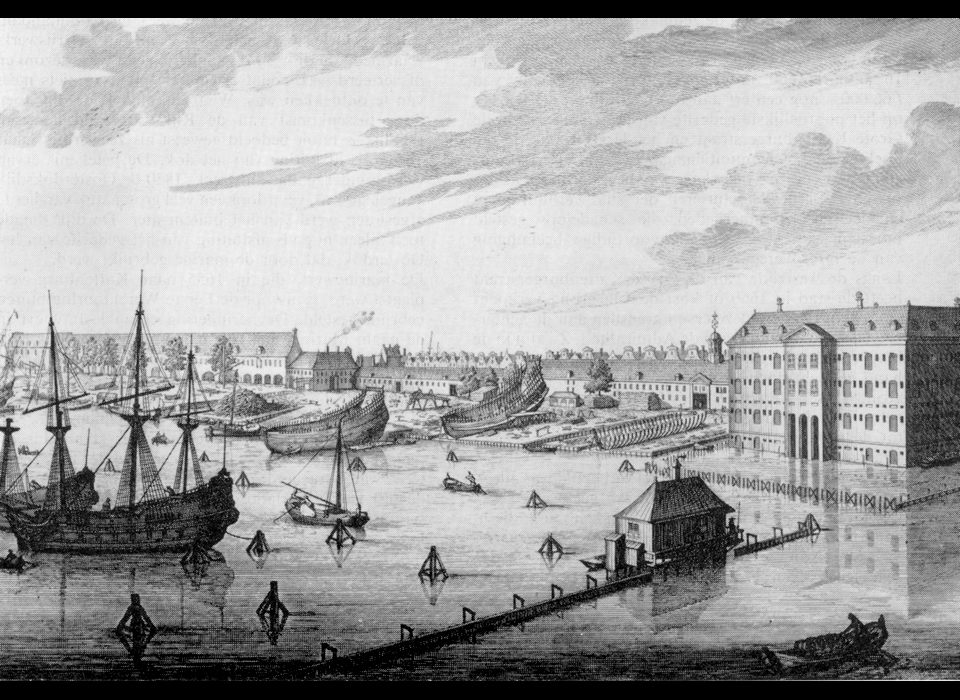
Around 1655, the shipyards of the Admiralty, today's Navy, emerged at this location. At the time, Amsterdam was the largest port in the world. The Marine Warehouse, now known as the National Maritime Museum, collected rainwater in the courtyard and supplied ships with supplies before they sailed out to all continents.
The Marineterrein serves as a testing ground for a livable city in a changing world. Titia Ex's research into the integration of light cycles in public spaces ties in directly with this. The project also invites reflection on how we can approach art, sustainability, and urban development differently.
Vallend Licht
Specs: Hemelwaterafvoer 9,50 meter, LED, regenwater, lichtanimatie ± 6 minuten.
Lokatie: 17e eeuwse Werfgebouw Marineterrein naast het Scheepvaartmuseum, Amsterdam.
Het kunstwerk Vallend Licht toont de nauwe verbondenheid tussen de geschiedenis, locatie en het ecosysteem van Amsterdam door middel van een samenspel van licht en water. Een bestaande afwateringspijp is getransformeerd tot een functionele semi-transparante hemelwaterafvoer. Het ritmische lichtprogramma is gebaseerd op diverse verschijningsvormen van water en geïnspireerd op natuurlijke kleuren, zoals algengroen of avondrood, die kenmerkend zijn voor de directe omgeving.
Rond 1655 ontstonden op deze locatie de werven van de Admiraliteit, de huidige Marine. Destijds was Amsterdam de grootste haven ter wereld. Het Zeemagazijn, nu bekend als het Scheepvaartmuseum, verzamelde regenwater op de binnenplaats en voorzag de schepen van voorraden voordat ze uitzeilden naar alle continenten.
Het Marineterrein fungeert als proeftuin voor een leefbare stad in een veranderende wereld. Het onderzoek van Titia Ex naar de integratie van lichtcycli in de publieke ruimte sluit hier direct op aan. Het project nodigt ook uit tot reflectie over hoe we anders kunnen omgaan met kunst, duurzaamheid en stedelijke ontwikkeling.